
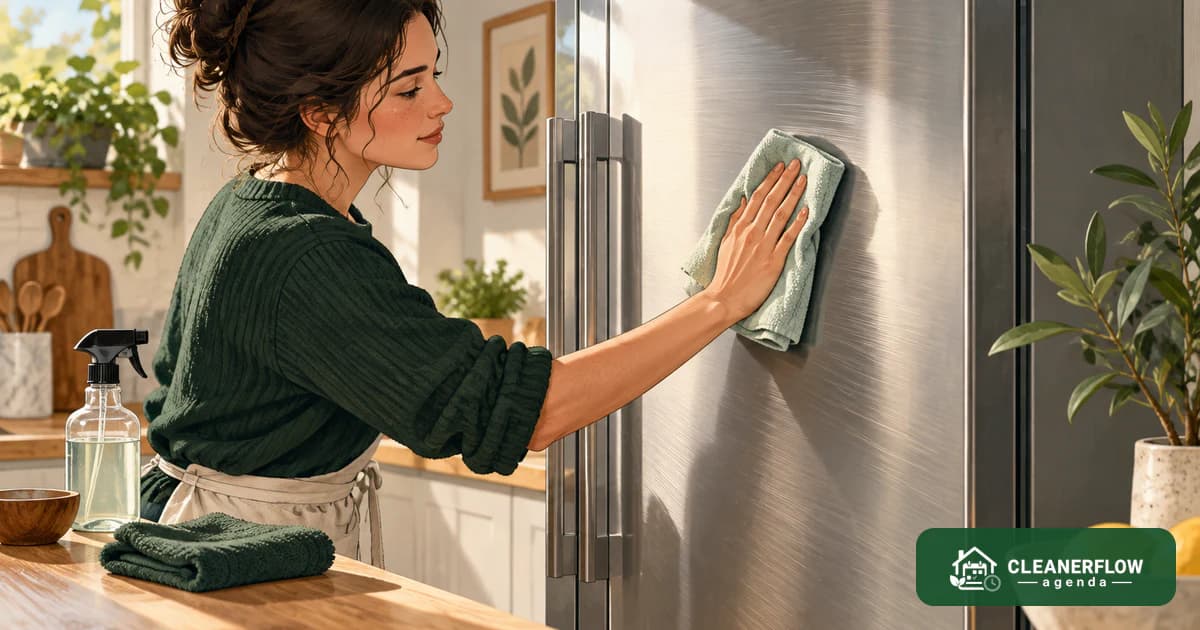
The kitchen is finished and it looks finished — until you step back and see the fridge door. Four smears, two handprints and a cloudy patch where you wiped it, and the whole room drops a grade because of one appliance. Stainless is the surface clients inspect without meaning to, because it is at eye level and it holds light. It is also the surface that gets worse the harder you work at it: the ordinary spray-and-buff that fixes everything else is exactly what leaves a fridge streakier than before you touched it. Here is how to clean stainless steel without streaks.
Why stainless steel streaks so easily
Stainless steel shows everything. Its shiny, reflective surface makes every fingerprint, water spot, smudge, and streak stand out, which is exactly why it looks bad the moment it is touched or cleaned carelessly. The common mistakes — using too much product, the wrong cleaner, or a dirty cloth — leave behind residue and streaks that are more visible than the marks you were trying to remove. Understanding that stainless steel punishes sloppy cleaning is the first step, because it means the technique matters as much as the product. Get the method right and it shines beautifully; get it wrong and you actually make it look worse.
Always wipe with the grain
The single most important rule for stainless steel is to wipe in the direction of the grain. Stainless steel has a subtle grain — fine lines running in one direction, like wood grain — and wiping along it rather than against it or in circles gives a clean, streak-free result. Look closely at the surface to find which way the grain runs, then always wipe in that direction. Wiping against the grain or in random circles works product and residue into the surface and leaves visible streaks. This one habit, wiping with the grain, is the biggest difference between a smeary finish and a flawless one.
Use the right cleaner, and not too much
For stainless steel, less is more, and the right product matters. A cleaner made specifically for stainless steel works well, but a small amount of dish soap and warm water, or a little vinegar, can also clean it effectively. The key is to use a small amount — a light application, not a heavy spray — because too much product is exactly what leaves streaks and residue. Whatever you use, apply it sparingly, wipe with the grain, and you avoid the buildup that a heavy hand creates. A gentle cleaner used lightly cleans stainless steel far better than a strong product used generously.
Never use abrasive tools or harsh scrubbers
Stainless steel scratches, so abrasive pads, scouring powders, and harsh scrubbers are off limits. A scratch in stainless steel is permanent and far worse than any smudge, so protecting the surface is essential. Use only soft cloths — good microfiber is ideal — and never a rough or scratchy pad on the finish. If there is stuck-on food or grime, soak it or use a gentle approach rather than scrubbing hard with something abrasive. Keeping only soft, non-scratching materials against stainless steel protects that expensive finish, which is part of doing the job well and not leaving damage behind.
Buff dry with a clean microfiber cloth
The secret to a truly streak-free finish is drying and buffing. After cleaning, go over the surface with a clean, dry microfiber cloth, wiping with the grain, to buff away any remaining moisture and streaks. This final buff is what takes stainless steel from clean-but-streaky to flawless and shining. Leaving the surface to air-dry lets water and product residue dry into spots and streaks, undoing your work. A dry microfiber buff, always with the grain, removes that residue and brings up the shine. This drying-and-buffing step is the finishing touch that separates an amateur result from a professional one.
Use two cloths: one to clean, one to dry
A simple pro trick is to use two microfiber cloths — one slightly damp with your cleaner to clean the surface, and one dry to buff it. You clean with the damp cloth, wiping with the grain, then immediately follow with the dry cloth to buff away any moisture and bring up the shine before it can dry into streaks. This two-cloth method gives a consistently flawless finish, because you never leave product to dry on the surface. It is a small habit that makes stainless steel come out perfect every time, and it is exactly the kind of technique that separates a polished professional job from a streaky one.
Tackle fingerprints and smudges the same way
Fingerprints and smudges are the most common complaint on stainless steel, and the same gentle method handles them. A light cleaner, a soft cloth, wiping with the grain, and a dry buff removes fingerprints without leaving new streaks in their place. The mistake is attacking smudges with heavy product or hard rubbing, which just spreads them. Instead, treat even a smudged surface gently and methodically — light cleaner, with the grain, then buff dry — and the prints disappear into a clean shine. Because fingerprints return quickly on stainless steel, doing them right, without adding streaks, is what makes the surface actually look clean when you finish.
A touch of oil for extra shine
Once stainless steel is clean and dry, a tiny bit of oil can give it an extra, protective shine. Putting a very small amount of a suitable oil on a cloth and buffing it lightly along the grain leaves a subtle sheen and can help resist fingerprints for a little while. The key word is tiny — too much oil leaves a greasy film that attracts more smudges, so this is a light finishing touch, not a heavy coat. Used sparingly on already-clean steel, a whisper of oil buffed with the grain gives that showroom shine clients notice, and it is a nice extra when you want the finish to look truly polished.
Do the whole appliance, including handles
Stainless steel appliances have details that collect the most grime — handles, edges, control areas, and the seams around them. The flat surfaces are easy, but the handles are where hands touch most and grime builds up. Detailing these high-contact areas along with the flat panels is what makes the whole appliance look genuinely clean rather than just partly wiped. Get into the handle grips, the edges, and any textured areas, cleaning them the same gentle way. Finishing the details as carefully as the big surfaces is what separates a quick wipe from a professional clean, and it is exactly what a client notices when they run a hand along the handle.
Let the app keep your kitchen results consistent
A flawless stainless steel finish is part of the professional kitchen result that impresses clients — and delivering that consistently is easier when your routine and supplies are organized, which is what CleanerFlow Agenda supports. By keeping your jobs, their tasks, and your supplies organized, you can maintain a reliable routine that includes the right cloths and cleaner for stainless steel, so every kitchen you finish shines. When your business runs smoothly around you, you can focus on the technique that makes surfaces flawless. Wipe with the grain, use a little cleaner and a soft cloth, never scratch, buff dry with microfiber, detail the handles, and let the app keep your routine organized — so every stainless steel surface you clean comes out streak-free, fingerprint-free, and shining like new.
The common mistakes that leave streaks
Most streaky stainless steel comes from a handful of avoidable mistakes, and knowing them lets you sidestep every one. The first is using too much product — a heavy spray leaves residue that dries into streaks, so go light. The second is wiping in circles or against the grain, which works product into the finish and shows every stroke; always follow the grain. The third is skipping the dry buff, which lets moisture dry into spots; always finish with a dry microfiber cloth. The fourth is using a dirty or linty cloth that leaves fibers and smears behind; use clean microfiber. And the last is reaching for an abrasive pad on stuck-on grime, which risks a permanent scratch; soak and wipe gently instead. Avoid those five, and stainless steel comes out flawless nearly every time. Almost every bad result you have seen on stainless steel traces back to one of them, which means fixing them is entirely within your control.
Why flawless stainless steel gets you noticed
Stainless steel is one of the first things a client sees in a kitchen, and it is one of the most noticeable signs of a careful, professional clean. A fridge and oven left shining, streak-free, and fingerprint-free tell a client instantly that their cleaner pays attention to detail, because these are exactly the surfaces that show sloppy work. Many cleaners leave stainless steel streaky without even realizing it, so being the one who gets it flawless sets you apart in a way clients feel the moment they walk into the kitchen. It is also a great before-and-after: a smudged, dull appliance restored to a mirror shine is a dramatic little transformation worth capturing. Master the with-the-grain, light-product, buff-dry method, deliver stainless steel that gleams, and let that flawless finish quietly signal the quality of your whole clean — while the app keeps your routine organized enough to deliver that same professional result in every kitchen, every time.