The inside of an oven is one of the hardest, most dreaded jobs in cleaning. Baked-on grease, burnt food, and blackened grime that has hardened over months resist everything and can eat forty-five minutes of exhausting scrubbing. But it does not have to be that way. The secret professional cleaners know is that you do not scrub an oven clean — you let the product do the work while you clean something else. Here is the low-effort method to get an oven clean without wearing yourself out, and how to do it safely.
Why ovens are so hard to clean
The grime inside an oven is not ordinary dirt — it is grease and food that has been baked on by heat, over and over, until it hardens into a tough, blackened crust. Because it has been essentially cooked onto the surface, it resists wiping and cracks the willpower of anyone who tries to scrub it off cold. Understanding what you are dealing with is the key: this is hardened, baked-on buildup that needs to be broken down chemically, not muscled off by force. Once you accept that scrubbing alone will never win, you can switch to the approach that actually works, which is far less effort.
The secret: let the product do the work
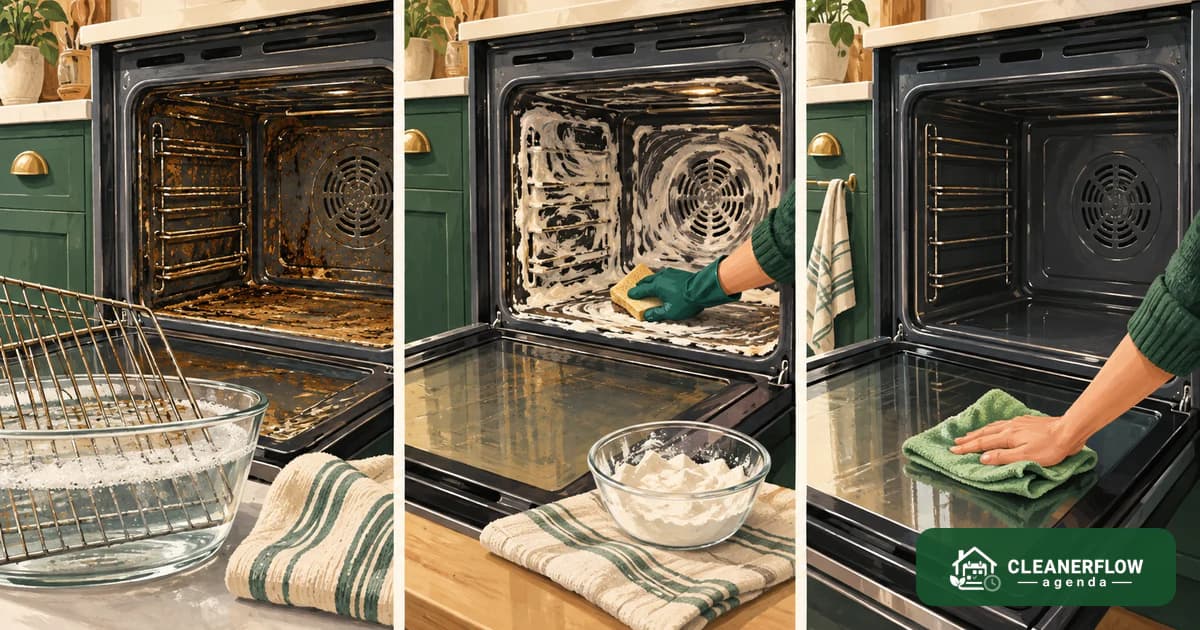
The single most important principle for cleaning an oven is patience — apply the right product and let it soak and break down the grime for you, rather than scrubbing immediately. Whether you use a dedicated oven cleaner or a baking soda paste, the method is the same: apply it generously to the baked-on buildup, then leave it to work for a good while, even overnight for a heavily soiled oven. As the product sits, it breaks down the hardened grease so that it wipes away with far less effort. This dwell time is the whole secret. Rushing to scrub gets you nowhere; letting the product work does most of the job for you.
The baking soda method
A gentle, low-chemical way to clean an oven is with a baking soda paste. Mix baking soda with a little water to make a spreadable paste, and coat the greasy interior surfaces with it, avoiding the heating elements. Let it sit for several hours or overnight, giving it time to break down the grime. Then wipe it away with a damp cloth, and the loosened buildup comes off with the paste. A little vinegar sprayed on can help lift any stubborn spots. This method uses simple, cheap ingredients, is gentler on you than harsh chemicals, and works well when you have the time to let it sit.
Using a commercial oven cleaner safely
A dedicated oven cleaner works faster and is stronger, but it requires care because these products are harsh. If you use one, always work with good ventilation — open windows and keep air moving — because the fumes are strong. Wear gloves to protect your skin, avoid getting it on your eyes, and follow the product's instructions exactly. Apply it to the buildup, let it dwell for the time the label says, and then wipe it away. A commercial oven cleaner cuts through heavy grease quickly, but its strength is exactly why you must use it with ventilation, gloves, and care, treating it as the powerful chemical it is.
Remove and soak the racks separately
The oven racks are best cleaned separately from the oven itself. Take them out and soak them — in a tub, a sink, or even a bag with cleaning solution — so the grime on them loosens while you work on the oven interior. Soaking the racks means the baked-on residue softens and wipes off far more easily than scrubbing them dry. Handling the racks apart from the oven also gives you more room to work inside the oven and lets both jobs progress at once. By the time you have finished the interior, the soaked racks are ready for an easy wipe, turning what would be a hard scrub into a simple rinse.
Do the door and glass too
A clean oven interior with a greasy, blackened door glass still looks dirty, so the door is part of the job. The inside of the oven door, especially the glass, collects baked-on splatter that dulls it. Apply your cleaner or paste to the door glass, let it soak like the rest, and then wipe and buff it clear. Getting the door glass clean so you can see through it again makes a huge difference in how clean the whole oven looks and feels. Finishing the door along with the interior is what turns a half-done oven into a genuinely clean one that impresses.
Wipe, rinse, and repeat if needed
After the product has soaked, wipe away the loosened grime with a damp cloth, working the softened buildup off. For a very dirty oven, one round may not remove everything, and that is normal — simply reapply the product to any stubborn spots, let it soak again, and wipe once more. Each round lifts more of the hardened crust. Do not expect months of baked-on grease to vanish in a single wipe; work in patient rounds of soak-and-wipe, and even a badly neglected oven comes clean. Finally, wipe the interior with clean water to remove any product residue, so nothing is left behind before the oven is used again.
Be careful with heating elements and self-clean
Two safety points matter with ovens. First, be careful around the heating elements — avoid getting cleaning product directly on them, as it can be a hazard when the oven is next heated. Second, know that many ovens have a self-clean function that uses high heat to burn off residue; while it exists, it produces strong heat and fumes and is not always the best choice, so if you use manual cleaning, keep products off the elements and wipe everything clean before the oven is heated again. Cleaning an oven safely means respecting that it is an appliance that gets very hot, so leave it clean and residue-free.
Charge for the oven — it is real work
Cleaning the inside of an oven is a substantial, time-consuming job, and it is one of the tasks that should be priced as an extra rather than absorbed into a regular clean. Even with the easy soak method, an oven takes real time and product, so it belongs on your add-on list at its own price. Never clean an oven for free just because a client asked; it is one of the hardest jobs in the home and it deserves to be paid for. Pricing the oven as the extra it is protects your time and your income, and clients expect that a deep task like the oven costs more, because they know how bad it is to do themselves.
Let the app price and track the oven job
The oven is a perfect example of a deep-cleaning task that should be a priced add-on — and CleanerFlow Agenda makes that easy to handle. By letting you set up extras like the inside of the oven with their own price, the app makes sure the real time and effort the oven takes is reflected in what you charge, and it shows up clearly on the client's quote so there are no surprises. When a client wants the oven done, you add it as the priced task it is and get paid fairly for it. Let the product do the work, soak the racks, do the door, work in patient rounds, stay safe around the elements, and let the app make sure the oven — one of the hardest jobs you do — always pays you what it should.
Plan the oven so it soaks while you clean the rest
The smartest way to fit the oven into a job is to make the soak time work for you instead of against you. The very first thing you do when you arrive should be to apply your product to the oven interior and set the racks soaking — before you clean anything else. Then you go clean the rest of the kitchen and the home while the oven quietly breaks down for the next thirty minutes to an hour. By the time you circle back, the grime is loosened, the racks have softened, and the oven that would have taken forty-five minutes of scrubbing now wipes out in a fraction of the time. This planning is the difference between the oven being a dreaded, exhausting job and being one of the easiest things on your list. Start the oven soaking first, work everything else, and finish it last — that single sequencing trick turns the hardest job in the kitchen into a mostly hands-off one.
The oven done right earns a reaction
Because the oven is the job everyone dreads and most people put off, a genuinely clean one earns a strong reaction from clients. A oven interior transformed from blackened and greasy to clean and clear is a dramatic before-and-after, and it is exactly the kind of result that makes a client feel they got real value. Many people avoid cleaning their oven for months or years precisely because it is so awful, so restoring it delights them in a way few other tasks can. Take a before-and-after photo of a nasty oven made clean and you have powerful proof of your work to share. So do not dread the oven — treat it as one of your highest-impact tasks, price it fairly as the real work it is, let the product carry the effort, and let that dramatic clean-oven result build both your reputation and your income, one soak-and-wipe at a time.