
How to Remove Hard Water Stains for Good
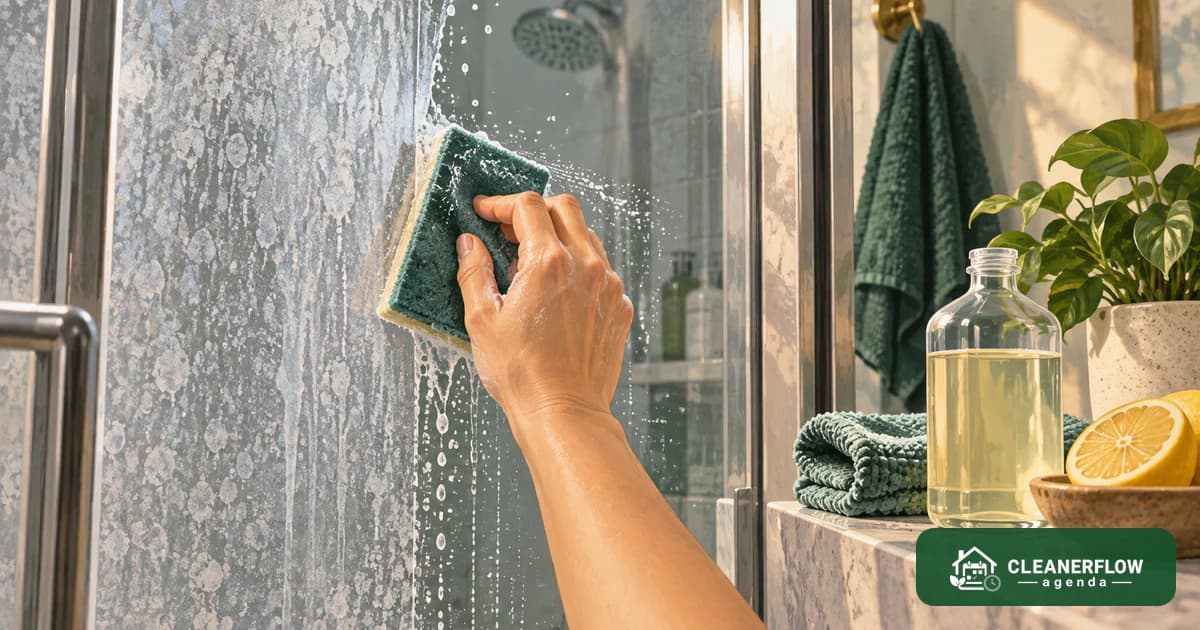
Hard water stains are one of the most frustrating things a cleaner has to deal with. Those cloudy white spots and crusty buildup on glass, faucets, and shower doors resist ordinary cleaning and can make an otherwise spotless bathroom look dirty. But hard water stains are beatable once you understand what they are and use the right approach. Here is how to remove hard water stains completely, and how to keep them from coming back so the surface stays clear.
What hard water stains actually are
Hard water stains are the mineral deposits left behind when hard water — water high in minerals — dries on a surface. As the water evaporates, it leaves the minerals behind as a chalky, cloudy, or crusty residue on glass, faucets, tiles, and fixtures. Understanding this is the key to removing them: they are mineral buildup, not ordinary dirt, which is why regular cleaners often fail to shift them. Because they are deposits that build up over time, the longer they sit, the tougher they get, so the approach to removing them has to actually break down the minerals rather than just wipe the surface.
Why ordinary cleaners do not work
The reason hard water stains resist normal cleaning is that they are not grease or grime — they are hardened mineral deposits. A general all-purpose cleaner is designed to lift dirt, not dissolve minerals, so it slides right over the buildup without touching it. To remove hard water stains, you need something that breaks down the minerals themselves. This is why so many cleaners scrub and scrub with a regular product and get nowhere — they are using the wrong kind of cleaner for the problem. Once you switch to an approach that targets the minerals, the same stains that seemed impossible start to come away.
Use an acidic approach to dissolve the minerals
The effective way to remove hard water stains is to use something mildly acidic, because acid breaks down the mineral deposits. Products made specifically for hard water and lime buildup are formulated to dissolve these minerals, and simple household acids like white vinegar can also work on lighter buildup. The acid reacts with the minerals and loosens them so they can be wiped or scrubbed away, where an ordinary cleaner would just slide over them. Reaching for an acidic cleaner instead of a general one is the single biggest shift that makes hard water stains actually come off.
Let it soak — do not just wipe
The most important technique for hard water stains is patience: let the acidic cleaner sit and work rather than wiping it immediately. Apply the product generously to the buildup and let it soak, giving the acid time to break down the hardened minerals. For heavy buildup, soaking a cloth in the product and laying it against the stain, or letting the product dwell for a while, dramatically improves results. Rushing to wipe right away does not give the acid time to work. The dwell time is where the real removal happens, so spray, walk away, come back, and you will find the stains far easier to remove.
Scrub gently, not harshly
Once the acidic cleaner has had time to break down the minerals, a gentle scrub lifts them away. Use a non-scratching pad or a suitable scrubbing tool appropriate for the surface, and work the loosened buildup off. The key is that after proper soaking, you should not have to scrub hard — the minerals should come away with reasonable effort. Avoid harsh, scratchy pads on glass or delicate fixtures, which can leave scratches worse than the stain. Gentle, patient scrubbing after a good soak removes hard water stains without damaging the surface, whereas aggressive scrubbing on unsoftened deposits just wears you out and risks harm.
Rinse and dry to a clear finish
After removing the buildup, rinse the surface thoroughly to wash away any dissolved minerals and product residue, then dry it. Drying is important, because water left to evaporate on the surface will start depositing minerals all over again. Buffing the surface dry with a clean cloth leaves it clear and spotless, and removes the film that would otherwise dull your work. This final rinse-and-dry step is what turns a de-scaled surface into a truly clear, sparkling one, and it is a big part of the difference between a job that looks decent and one that looks flawless.
Tackle stubborn, long-standing buildup in stages
Very heavy, long-standing hard water buildup may not come off in one pass, and that is normal. For the toughest deposits, you may need to apply the acidic cleaner, let it soak, gently scrub, and then repeat the process. Each round breaks down more of the mineral layer. Do not expect years of buildup to vanish in a single wipe; approach it in stages, re-soaking and re-scrubbing, and even the worst hard water stains gradually give way. Patience and repetition beat force here — several gentle rounds remove buildup that no amount of hard scrubbing in one go ever would.
Prevent stains from coming back
Removing hard water stains is only half the battle; keeping the surface clear is the other half. The key to prevention is keeping surfaces dry, because hard water stains form when mineral-rich water sits and evaporates. Wiping down glass shower doors and fixtures after use, keeping them dry, dramatically slows the return of buildup. For clients, a squeegee on the shower glass or a quick dry-off after showering makes a huge difference. When you clean a surface clear of hard water stains, letting the client know how to keep it dry helps your work last, so the sparkling result you delivered does not cloud over again in a week.
Let the app help you price the tough jobs right
Removing hard water stains is slow, demanding work, and it is exactly the kind of deep-cleaning task that should be priced as an extra rather than absorbed into a regular clean — and CleanerFlow Agenda helps you handle that. By letting you set up deep cleans and add-on tasks with their own pricing, the app makes sure the extra time hard water removal takes is reflected in what you charge, so you are paid fairly for the tough jobs. When a client wants years of buildup gone, you can quote it as the substantial task it is instead of doing an hour of hard scrubbing for free. Use an acidic approach, let it soak, scrub gently, rinse and dry, work in stages, help clients prevent it, and let the app make sure the demanding jobs pay you what they should.
The right tools for hard water removal
Having the right tools makes hard water removal far easier and safer for the surface. A non-scratching scrub pad or a soft-bristle brush lifts loosened minerals without marking glass or chrome. A plastic scraper or an old card can gently pop off crusty buildup on flat glass without scratching, when used carefully. Good microfiber cloths do the final rinse and buff to a clear shine. And for glass shower doors, a squeegee is invaluable both for the cleaning and for showing the client how to keep them clear afterward. Reach for gentle tools with an acidic cleaner and a good soak, and you protect the surface while removing the buildup. Harsh, scratchy tools are the fastest way to trade a hard water stain for a permanent scratch, so let the product and the dwell time do the hard work, and use your tools only to lift what has already been loosened.
Turn hard water jobs into a reputation-builder
Here is the bigger opportunity hidden in hard water stains: because they are so tough and so many cleaners fail at them, removing them well makes you look like a genuine expert. A shower door that a client thought was permanently cloudy, restored to crystal clarity, is exactly the kind of dramatic result that earns a wow, a five-star review, and a referral. Take a before-and-after photo of a badly scaled surface transformed to sparkling, and you have powerful proof of your skill to share. Clients remember the cleaner who solved the problem everyone else gave up on. So do not dread hard water stains — treat them as a chance to prove your expertise on the exact job that impresses clients most. Master the acidic-soak method, price the extra time fairly with the app, deliver a clear, sparkling result, and let those tough jobs quietly build the reputation that fills your calendar. The stain everyone else called impossible becomes the job that makes you unforgettable. And once you have beaten hard water stains a few times with the acidic-soak method, they stop feeling like an impossible chore and start feeling like a routine part of a thorough bathroom — one more thing you handle with quiet confidence while other cleaners still scrub in vain. That quiet confidence is exactly what a seasoned professional brings to every home.