
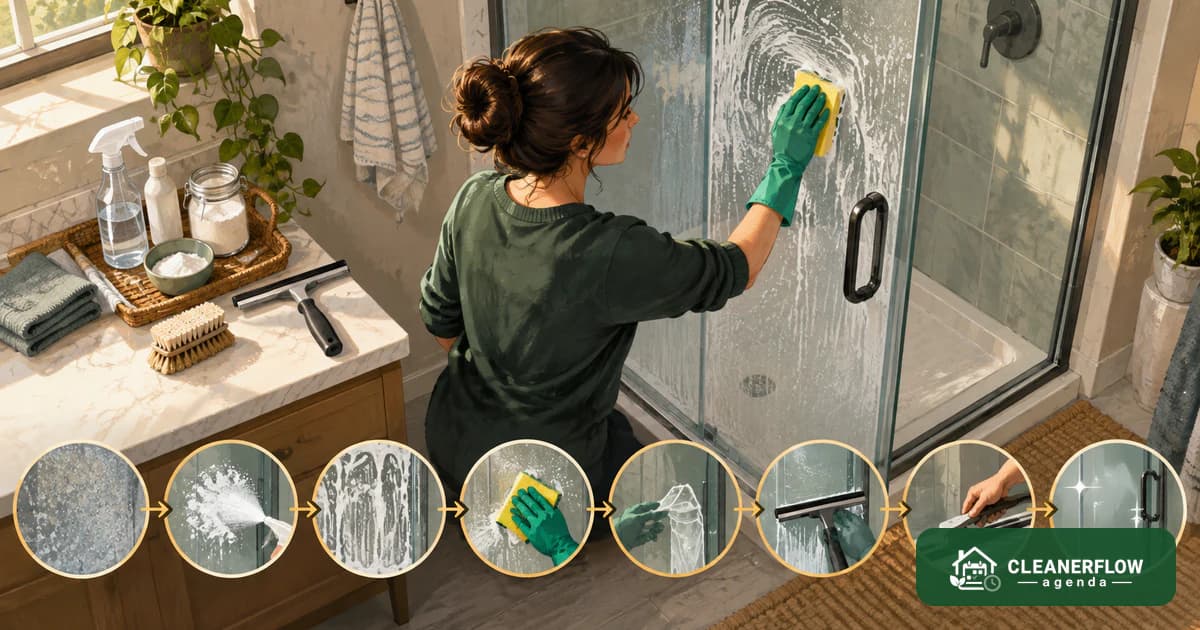
A cloudy, filmy glass shower door can make an entire bathroom look dirty, no matter how spotless everything else is. That hazy film is a mix of soap scum and hard water minerals, and it resists ordinary cleaning stubbornly. But a glass shower door restored to crystal clarity is one of the most impressive, satisfying results a cleaner can deliver — the kind that makes a client say wow. Here is how to cut through the buildup and leave shower glass genuinely clear, and how to keep it that way.
Why shower glass gets so cloudy
The film on a glass shower door comes from two things building up together: soap scum, the greasy residue left by soap and body products, and hard water minerals, the deposits left when mineral-rich water dries on the glass. Over time these layers combine into a stubborn, cloudy film that ordinary cleaners slide right over. Understanding that you are fighting two different kinds of buildup — one greasy, one mineral — is the key to removing it, because you need an approach that tackles both. This is why shower glass is one of the toughest surfaces in a bathroom, and why so many cleaners struggle to get it truly clear.
Ordinary glass cleaner is not enough
A standard glass cleaner works fine on a mirror, but it is not built to cut through thick soap scum and mineral buildup. Spraying glass cleaner on a heavily filmed shower door just smears the buildup around without removing it, leaving the glass still cloudy. To actually clear the glass, you need a product strong enough to break down the soap scum and the hard water minerals — a dedicated bathroom or soap-scum cleaner, or an acidic approach for the mineral part. Reaching for the right product, not just a general glass spray, is the first step that makes the difference between a smeared door and a clear one.
Apply the right cleaner generously and let it soak
The most important technique for shower glass is patience: apply a strong bathroom cleaner or soap-scum remover generously to the glass and let it sit and work. The buildup is thick and hardened, so giving the product time to break it down does most of the job for you. Rushing to wipe immediately just moves the film around. Let the cleaner dwell for a while, so it can dissolve the soap scum and loosen the minerals, and you will find the buildup comes away far more easily. This soak time is the single biggest reason some cleaners get shower glass clear while others scrub in vain.
Scrub gently to lift the loosened film
After the cleaner has had time to work, use a non-scratching pad or a soft scrubber to work the loosened buildup off the glass. With the film softened by a good soak, it should lift with reasonable effort rather than endless hard scrubbing. Be careful to use a pad that will not scratch glass — the goal is to remove the film, not mark the surface. Work over the whole door, paying extra attention to the areas with the heaviest buildup, usually near the bottom and the edges. Gentle scrubbing after a proper soak clears the glass without risking scratches, which is exactly the balance you want.
Tackle the hard water minerals with acid
If the glass is still cloudy after cutting the soap scum, the remaining haze is likely hard water minerals, which need an acidic approach to dissolve. Applying an acidic cleaner made for hard water or lime, letting it soak, and then gently scrubbing breaks down the mineral film that a soap-scum cleaner alone will not touch. Often shower glass needs both: first cut the greasy soap scum, then dissolve the mineral deposits. Handling both kinds of buildup, in turn, is what takes glass from smeared to genuinely clear, because you have addressed each layer with the right tool for it.
Rinse and squeegee to a streak-free shine
Once the buildup is gone, rinse the glass thoroughly to wash away all the dissolved residue, then finish with a squeegee and a dry microfiber cloth. The squeegee pulls the water off in clean strokes, and a final buff with a dry cloth removes any remaining streaks, leaving the glass sparkling and clear. Letting water simply dry on the glass would start depositing minerals all over again, so this drying step is essential. A proper rinse and dry is what turns a de-scummed door into a truly crystal-clear one, and it is a big part of the impressive finish that makes clients notice.
Do not forget the tracks and frame
The glass is the star, but the metal frame and the track at the bottom of the shower door collect their own grime, soap scum, and even mildew, and cleaning them completes the job. A door with clear glass but a filthy track still looks neglected. Use your bathroom cleaner and a small brush or an old toothbrush to scrub out the track and detail the frame, getting into the corners where buildup hides. Finishing the frame and track along with the glass is what makes the whole shower door look truly clean and cared for, rather than just the flat glass surface.
Show the client how to keep it clear
Once you have restored a shower door to clear glass, its enemy is the same buildup returning, and a client can slow that dramatically with one habit: keeping the glass dry. Because soap scum and hard water both build up when water sits and dries on the glass, wiping the door down or using a squeegee after each shower keeps it clear far longer. Letting the client know this simple tip helps your work last, so the sparkling result you delivered does not cloud over within days. It also positions you as the knowledgeable expert who not only cleaned the glass but taught them how to keep it that way.
Why clear glass is worth the effort
A clear glass shower door is one of the most noticeable results in a whole bathroom, which is exactly why it is worth mastering. Clients see cloudy shower glass as a sign of a dirty bathroom, and clearing it completely transforms how clean the whole room looks and feels. It is also a dramatic before-and-after — hazy film to crystal clarity — that earns wows, reviews, and referrals. Because it is a tough job that many cleaners cannot fully do, being the cleaner who leaves shower glass truly clear sets you apart and builds your reputation. The effort pays off in both the client's reaction and the impression it leaves.
Let the app help you charge for the deep work
Restoring badly built-up shower glass is slow, demanding work, and it belongs in a deep clean or as a priced add-on rather than absorbed into a regular visit — and CleanerFlow Agenda helps you handle that fairly. By letting you set up deep cleans and extra tasks with their own pricing, the app makes sure the real time it takes to clear heavy soap scum and hard water is reflected in what you charge. When a client wants years of cloudy buildup gone, you can quote it as the substantial task it is instead of scrubbing for free. Use the right products, let them soak, tackle both scum and minerals, rinse and squeegee, finish the frame, teach the client to keep it dry, and let the app make sure the tough, impressive jobs pay you what they should.
A step-by-step for a badly filmed door
When you face a shower door with years of buildup, follow a clear sequence and it comes clear. First, apply your soap-scum or bathroom cleaner generously across the whole door and let it soak while you clean something else nearby. Come back and gently scrub the softened film with a non-scratch pad, top to bottom. Rinse and look: if a cloudy mineral haze remains, apply an acidic hard-water cleaner, let that soak, and gently scrub again. Rinse thoroughly. Then squeegee the water off in clean, overlapping strokes and buff any last streaks with a dry microfiber cloth. Finally, scrub the frame and track with a small brush. For a truly neglected door, you may repeat the soak-and-scrub a second time on the worst spots — that is normal, not a failure. Worked in this order, patiently, even the haziest door comes back to clear glass, and the transformation is dramatic enough to make the whole bathroom feel new.
Protect the surface as you work
One caution worth keeping in mind: glass and its fittings can be scratched or damaged by the wrong tools, so protecting the surface is part of doing the job well. Always test a pad or product on a small, hidden area first if you are unsure, use only non-scratching pads on the glass itself, and be gentle around any coated or treated glass, which some modern showers have. Reserve harder scrubbing tools for the metal track, not the glass. The whole point of letting products soak is so you do not have to scrub hard enough to risk damage — the chemistry does the work, and your tools only lift what is already loosened. A cleaner who clears the glass beautifully but leaves it scratched has traded one problem for a worse, permanent one. Work patiently with gentle tools, let the products carry the load, and you deliver crystal-clear glass with the surface fully protected — and let the app keep these demanding jobs priced fairly, so the extra care and time you put into them always pays you back.