How to Write the Message That Turns "Maybe" Into a Booking
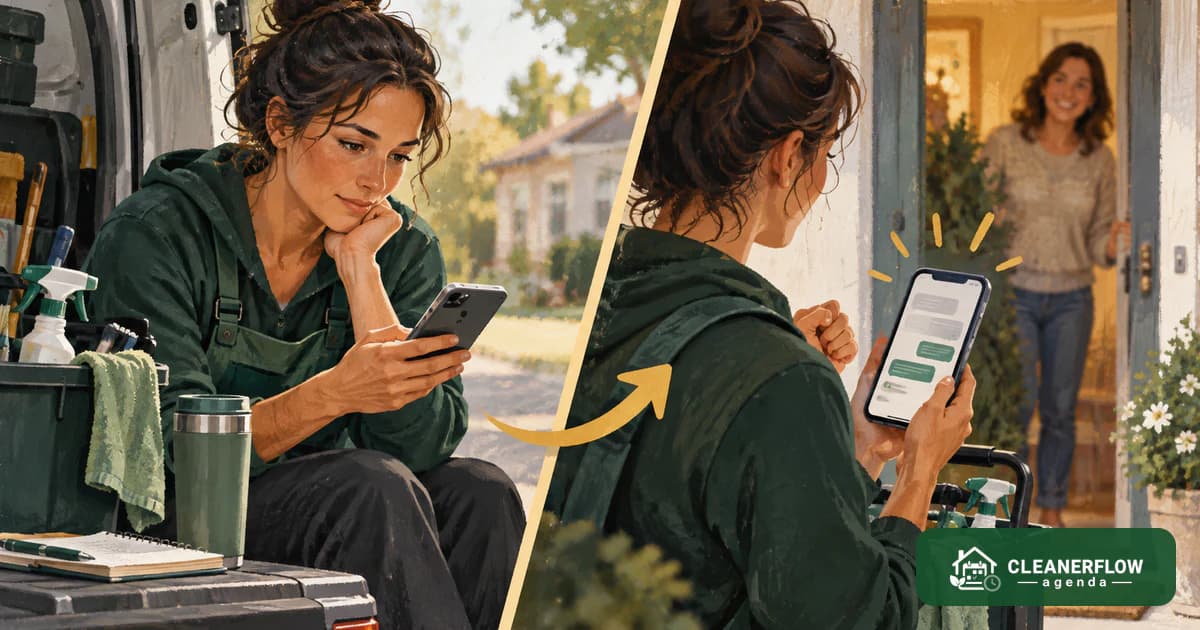
"Let me talk to my husband and I'll get back to you." That was eleven days ago. She was warm, she liked the price, she asked when you could start — and then nothing, and you have decided she went with somebody else. She probably did not. She got busy, the thread scrolled up her phone, and the cleaner who sent one short message on day three is the one now cleaning her house on Thursdays. Here is what that message says, when to send it, and when to stop.
Silence is not a no
The first thing to understand is that when a potential client goes quiet, it almost never means they decided against you. Life is busy. People get your quote while making dinner, mean to reply later, and forget. They get distracted, they compare a couple of options and lose track, or they are simply waiting for a small push to commit. Treating silence as a rejection means giving up on clients who were genuinely interested. The cleaner who follows up wins jobs that the cleaner who assumes the worst quietly loses. A quote with no reply is not a closed door — it is an open conversation waiting for you to continue it.
Following up is expected, not annoying
Many cleaners never follow up because they are afraid of seeming pushy. But a single friendly follow-up is not pushy — it is professional, and most clients actually appreciate it. A warm check-in shows you are attentive, reliable, and genuinely want to help, which are exactly the qualities someone wants in a person coming into their home. Far from annoying people, a good follow-up often relieves them, because it reminds them of something they meant to do. The fear of bothering people costs cleaners more jobs than any actual bother ever does. Done warmly and briefly, a follow-up is a service, not a nuisance.
Wait the right amount of time
Timing your follow-up matters. Too soon feels impatient; too late and the moment has passed. A good rhythm is to follow up a day or two after your quote if you have not heard back — long enough that you are not hovering, soon enough that they still remember the conversation and the need is fresh. If that first follow-up gets no response, a second, more spaced-out one later can still work, but you do not want to wait weeks and let the lead go completely cold. A gentle, well-timed nudge a day or two out catches most interested clients right when a small reminder is all they needed.
Keep it warm and light
The tone of your follow-up is everything. It should be friendly, warm, and completely free of pressure or guilt. Never make a client feel bad for not replying, and never sound demanding. A light, cheerful message that assumes the best — that they are simply busy — lands far better than one that sounds impatient. Something like: "Hi! Just wanted to check in and see if you had any questions about the cleaning. I'd love to help whenever you're ready!" That is warm, easy, and pressure-free. The goal is to feel like a friendly reminder from someone helpful, not a demand from someone anxious about the sale.
Make it easy to say yes
A great follow-up removes friction and hands the client an easy next step. Instead of a vague "let me know," give them a simple, concrete way to move forward: "I have Tuesday or Thursday morning open this week — would either work for you?" Now saying yes is as easy as picking a day, which is far less effort than deciding to hire someone from scratch. The easier and more specific you make the next step, the more follow-ups turn into bookings. A message that just checks in is fine; a message that checks in and offers a clear, simple way to book is far more powerful, because it does half the deciding for them.
Add a gentle, honest reason to act
A light touch of "now is a good time" can move a hesitant lead without any pressure. You do not need fake urgency or gimmicks — just an honest, gentle reason: "I'm booking up for next week, so I wanted to check before my schedule fills." Or, "I have an opening this week if the timing works for you." This nudges someone who was going to book eventually to do it now, simply by giving them a natural reason. Keep it genuine — never invent false scarcity — but a real, honest hint that acting sooner is better often turns a lingering "maybe" into a decision.
Answer the doubt behind the silence
Sometimes silence hides a specific hesitation — the price felt high, they were unsure about something, they wanted to compare. A good follow-up can gently open the door to that: "If you have any questions or if there's anything I can adjust to fit what you need, just let me know!" This invites the client to voice a concern you can actually address, instead of quietly walking away with it unresolved. Many "maybes" are really unspoken questions, and a follow-up that makes it easy to ask turns a silent doubt into a conversation you can win. You cannot answer an objection you never hear, so invite it warmly.
Know when to let it go gracefully
Follow up, but do not chase forever. One or two warm, well-spaced follow-ups is professional; a barrage of messages is not, and it can damage your reputation. If a lead does not respond after a couple of friendly attempts, let it rest gracefully with a warm final note: "No worries at all — I'm here whenever you're ready, just reach out anytime!" This leaves the door open without pressure, so that if they do decide later, they feel comfortable coming back to you. Knowing when to stop protects your professionalism and keeps you from souring a lead that might still come around on its own timing.
Follow-up is where quiet money lives
Most cleaners quote a client, hear nothing, and move on — leaving a real, winnable job on the table simply because they never sent one friendly message. The cleaners who consistently follow up book noticeably more jobs from the exact same leads, because they capture all the interested clients who just needed a nudge. Following up is one of the highest-return habits in the whole business: it costs you thirty seconds and a warm message, and it recovers jobs you already did the work to earn by quoting. Make a simple habit of following up on every quote that goes quiet, and watch how many "maybes" quietly turn into booked, paying clients.
Let the app help you follow up and close
Following up well is far easier when you are organized — when you know who you quoted, when, and what for, so no interested lead slips through the cracks. That is exactly what CleanerFlow Agenda helps with: your quotes and clients stay organized in one place, so you can see who has not responded and send a quick, professional follow-up, then book them straight onto your calendar the moment they say yes. A clean quote to reference and an easy way to schedule makes the whole follow-up feel effortless and professional. Treat silence as an open conversation, follow up warmly and promptly, make saying yes easy, and let the app keep your leads organized so every "maybe" gets the friendly nudge that turns it into a booking.
Follow-up messages you can copy
Having a few ready-made lines means you never freeze or overthink it. Keep these in your notes and adapt them warmly. First follow-up, a day or two after a quote: "Hi [name]! Just checking in on the cleaning quote I sent — happy to answer any questions. I have some openings this week if you'd like to get started!" A softer, question-opening version: "Hi! Wanted to make sure you got my quote and see if there's anything I can adjust to fit what you're looking for." A gentle nudge with a reason: "Hi [name]! My schedule is filling up for next week, so I wanted to check before it does — would you like me to save you a spot?" And a graceful final note if there is still no reply: "No worries at all — the offer stands whenever you're ready. Just reach out anytime and I'd be glad to help!" Four short messages that cover almost every situation. Pick the one that fits, make it sound like you, and send it — the hardest part is just deciding to hit send.
The follow-up is a preview of your reliability
There is a deeper reason follow-ups work so well, beyond just the reminder: a warm, prompt, professional follow-up shows the client exactly what it will be like to work with you. If you are attentive and reliable before they have even hired you, they trust that you will be attentive and reliable once you are cleaning their home — and reliability is the number one thing clients want in a cleaner. In this way, every follow-up is a small demonstration of your professionalism, quietly answering the unspoken question every client has: "Can I count on this person?" A cleaner who follows up warmly and well has already started proving the answer is yes, before the first cleaning even happens. So do not think of the follow-up as chasing a sale — think of it as your first chance to show a client the dependable, caring professional they are about to hire. That is why it converts, and that is why it is worth sending every single time.